


Event Cancellation Insurance in Hong Kong: A Typhoon Claim Case Study

Connect with us


Further Reading

05 March 2026
How Insurers Price Business Insurance: A Plain-English Guide to Premium Drivers
Read more
At CCW Global we believe that transparency is critical to your successful ownership of an insurance policy. Our mission goes beyond simply advising you on what coverage may be suitable for the various risks you face; we also work to empower you with the knowledge and insight needed to navigate the often-complex world of insurance.
Typhoon season across Asia is notoriously unforgiving to live events; especially when a tour is scheduled across multiple destinations, in different countries, and with tight deadlines between dates.
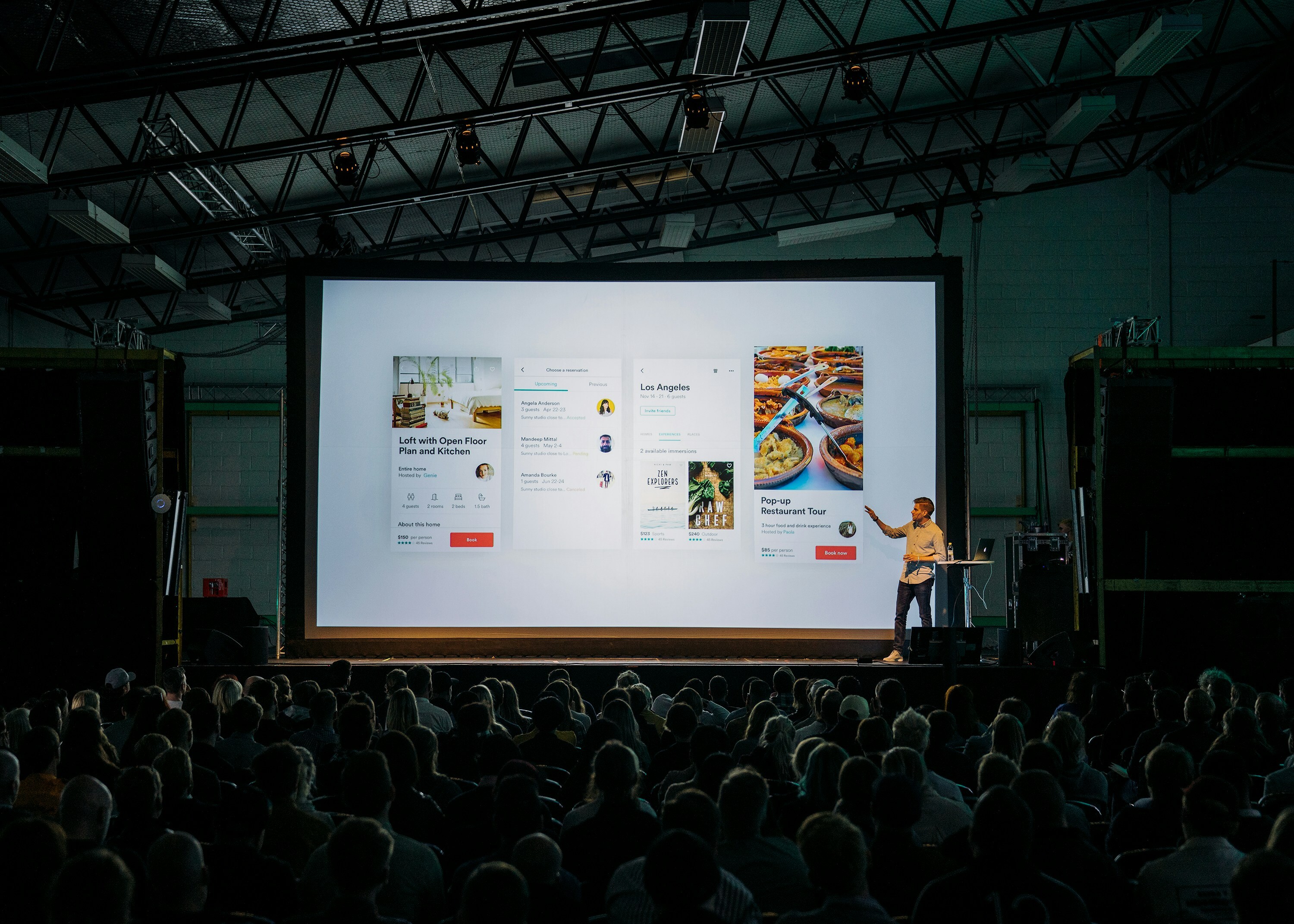
This case study is for an Event Insurance Policy arranged and managed by CCW Global, and involves a high-profile speaking tour that staged four ticketed shows, in 4 different cities, across the Asia-Pacific region.
Introduction to the case: Asian Event Insurance
Mr. X, the client, has arranged a ticketed speaking tour with multiple dates across Asia.
In order to protect the tour’s balance sheet, Mr. X and his production team purchased All-Risks Event insurance including benefits for cancellation situations, and coverage against “forced loss of audience” incidents.
The tour had booked shows in Singapore, Kuala Lumpur, Hong Kong, and Bali, and were proceeding under a production model that is typical for premium, venue-based events.
This model involved multiple factors, including committed venue and production spending ahead of the show day, cross-border travel and accommodations for key personnel, time-sensitive logistics for the performance, and ticket revenue that could be materially impacted by postponement or cancellation.
Show Cancellation During a Hong Kong Typhoon
On the date set for the Hong Kong show, HKSAR was hit by the full force of Typhoon Ragasa.
Weather conditions escalated to a point where the event could not safely proceed.
For the event organizers, Mr. X and his team, the immediate priority was ensuring crowd safety, followed by venue constraints, and the need to make rapid decisions regarding any possible postponement of the event to a later date.
Understanding this, critical mitigation was achieved by securing an alternative date for the Hong Kong performance. This single action materially reduced the insured loss as it allowed the organizer to preserve a portion of their revenue, and avoid writing off the entire Hong Kong show as a total loss.
However, the loss did not disappear; even with a rescheduled date, major costs had already been incurred in securing the venue and getting to Hong Kong. Additional expenses are compounding these costs due to the need to re-arrange travel and re-produce the event on the ground.
Further to this, not every ticket holder attending the original show was able to make it to the new date; creating refund pressure and a measurable loss of audience.
Cancellation Coverage Matters
The commercial risk for many events and performances is not simply “does the show happen?” but can rather be found in the unrecoverable costs that continue to build even when the curtain never goes up.
Many event organizers often assume that if a show is postponed, rather than abandoned, insurance is less relevant. In truth, postponing a show can be financially complex and not without its own risks and headaches. Rescheduling often introduces additional costs and expenditures at a time when cashflow is under strain dealing with existing the emergency. From rebooking travel, extending accommodation, re-ordering production supplies, and re-creating the performance space, the costs can quickly add up and spiral out of control.
In this instance, the Event Insurance coverage purchased by Mr. X included dedicated cancellation limits, as well as an extended “additional costs” benefit.
The insurance also contemplated audience disruption via a specific forced-loss-of audience coverage benefit.
This gave Mr. X and his team access to indemnity beyond pure revenue loss, and matters due to the fact that (for most events) the most immediate post-typhoon impact is not only the inability to perform the original date, but also the reduced capacity to monetize the rescheduled date in line with travel disruption, schedule conflicts, or even customer preference.

Event Insurance Coverage and a Real Claim
The value of this claim is how clearly it demonstrates the practical interplay of core event cancellation cover and audience-related extensions.
Mr. X and his team purchased cancellation cover with a substantial limit, and a HK$0 deductible, providing clean balance sheet protection once the cancellation trigger was established.
The policy also included a forced loss of audience benefit with a defined deductible, meaning Mr. X and his team would cover the initial portion of the claim with the insurance paying the remainder.
In event insurance, these structural details are not administrative fine print; they directly determine the net claim outcome, the documentary burden, and the speed at which a settlement can be progressed.
In this situation, for the postponement of Mr. X’s Hong Kong show, the final agreed claim amount was HK$ 272,108 (US$ 34,896).
This presented as a combination of two primary factors.
First, was the audience-driven financial impact directly connected to ticket refunds and reduced attendance.
Audience impact was the single largest driver for the bulk of the claim amount. Despite being able to secure a replacement date, a significant number of ticket-holders were unable to attend the postponed show. This meant that refunds had to be issued on an associated loss of audience that would have otherwise been profit had everything gone to plan. This is exactly the type of “hidden profitability” exposure that many event organizers and production teams overlook until it is too late.
Second, are the operational and logistical costs directly attributable to the rescheduling of a cross-border production.
Typhoon disruptions are rarely confined to a single location or venue. The impact of a major typhoon creates knock-on effects towards flights, hotel stays, transfers, production crew safety, and even coordination costs. When a tour is already on location, moving from city-to-city, the additional costs associated with rebooking’s and extensions can add up quickly. This is especially true in a postponement scenario where the new performance date must be executed without diminishing production standards.

Practical Event Insurance Lessons
One of the major factors in the speedy resolution of this claim was the organizer’s ability to evidence what changed, why the changed occurred, and what costs went above and beyond their original planning.
In addition to this, securing an alternative date was crucial when it came to mitigating the total loss realized by the production team. This was not only a sensible solution, but also aligned with how event insurance coverage is actually intended to respond to a claim situation. By acting quickly and decisively to salvage revenue and reduce the total loss under the policy, Mr. X and his production team preserved their bottom line, while ensuring the claim was able to be covered under the policy’s limits.
Hong Kong events face a concentrated weather risk profile, and typhoon disruption is uniquely challenging because it can trigger venue shutdowns, public transport limitations, and safety restrictions with little notice.
For organizers, the takeaway is that cancellation cover is not merely about catastrophic abandonment. It is about protecting profit margins against the secondary effects of disruption; refund obligations, rescheduling costs, and the reality that attendance may not fully recover.
In this case, the inclusion of cancellation and forced loss of audience cover, with clear limits and deductibles, was central to the insured’s ability to convert an operational crisis into a manageable financial outcome.
For more information about Event Insurance, or to find out what insurance may be suitable for your unique needs, Ask CCW.
Where your insurance is always Swift, Simple, and Sorted.